Introduction
Adenoiditis is a common condition that affects the adenoids—small lymphatic tissues located at the back of the nasal cavity. These tissues play an important role in fighting infections, especially during childhood. However, when they become inflamed or infected, they can cause breathing problems, recurrent infections, and discomfort.
Although adenoiditis is more common in children, it can occasionally affect adults as well. Understanding its symptoms, causes, and treatment options is essential for early management and preventing complications.
What is Adenoiditis?
Adenoiditis refers to the inflammation or infection of the adenoids, which are part of the immune system. When these tissues become swollen, they can block airflow through the nasal passages and contribute to recurring ear, throat, and sinus infections.
In simple terms:
👉 It is an infection or swelling of the adenoids that affects breathing and increases susceptibility to respiratory problems.
Causes of Adenoiditis
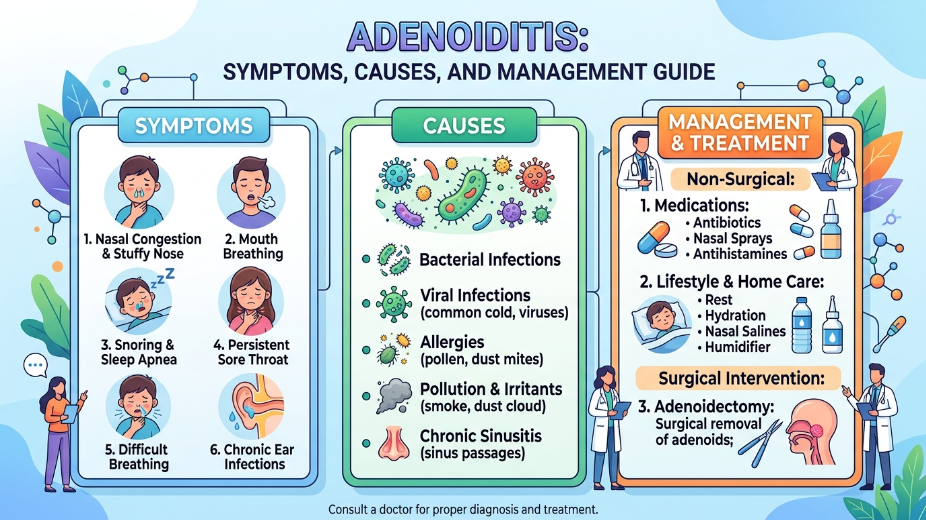
Adenoiditis is usually caused by infections or immune responses. The main causes include:
1. Bacterial Infections
Common bacteria such as Streptococcus can infect the adenoids, leading to swelling and pain.
2. Viral Infections
Viruses responsible for colds and flu often trigger inflammation in the adenoids.
3. Frequent Respiratory Infections
Repeated infections weaken the adenoids, making them more prone to inflammation.
4. Allergies
Allergic reactions can cause chronic irritation and enlargement of adenoid tissue.
5. Environmental Factors
Exposure to pollution, smoke, or irritants can worsen symptoms.
Symptoms of Adenoiditis
The symptoms can vary depending on severity but commonly include:
Nasal Symptoms
- Stuffy or blocked nose
- Mouth breathing
- Nasal voice
Throat & Breathing Symptoms
- Sore throat
- Snoring during sleep
- Sleep disturbances or sleep apnea
Ear-Related Symptoms
- Ear pain or pressure
- Frequent ear infections
- Hearing difficulties
General Symptoms
- Fever
- Fatigue
- Swollen lymph nodes
Children with chronic adenoiditis may also experience poor sleep quality and difficulty concentrating.
How Adenoiditis is Diagnosed
Doctors diagnose adenoiditis using several methods:
1. Physical Examination
A doctor examines the throat, nose, and ears.
2. Nasal Endoscopy
A small camera is used to view the adenoids directly.
3. Throat or Nasal Swabs
To detect bacterial infections.
4. Imaging Tests
X-rays or scans may be used in chronic cases.
Treatment Options for Adenoiditis
Treatment depends on severity and cause.
1. Medications
- Antibiotics for bacterial infections
- Antihistamines for allergy-related inflammation
- Nasal sprays to reduce swelling
- Pain relievers for discomfort
2. Home Care
- Steam inhalation to clear nasal passages
- Warm saltwater gargles
- Hydration to thin mucus
- Rest to support immune recovery
3. Surgical Treatment (Adenoidectomy)
In severe or recurring cases, doctors may recommend removal of the adenoids. This procedure is called adenoidectomy and is usually safe and effective, especially for children with chronic symptoms.
Complications of Untreated Adenoiditis
If left untreated, adenoiditis may lead to:
- Chronic ear infections
- Hearing loss
- Sleep apnea
- Sinus infections
- Breathing difficulties
Early treatment helps prevent long-term complications.
Prevention Tips
You can reduce the risk of adenoiditis by:
- Maintaining good hygiene (handwashing)
- Avoiding exposure to smoke and pollution
- Treating colds and infections early
- Managing allergies properly
- Strengthening immunity through a healthy diet
When to See a Doctor
Consult a healthcare professional if you notice:
- Persistent nasal blockage
- Frequent ear infections
- Loud snoring or breathing issues during sleep
- Recurring fever or sore throat
- Difficulty breathing through the nose
Early diagnosis ensures better recovery and fewer complications.
Conclusion
Adenoiditis is a manageable condition when diagnosed early and treated properly. While it is common in children, adults can also be affected in rare cases. With the right combination of medical care, home remedies, and preventive measures, most patients recover fully without long-term issues.
Understanding its symptoms and causes is the first step toward effective treatment and better respiratory health.
FAQ’s
1. What is adenoiditis?
Adenoiditis is the inflammation or infection of the adenoids, small tissues located behind the nose that help fight infections.
2. What causes adenoiditis?
It is mainly caused by viral or bacterial infections, allergies, or repeated respiratory illnesses.
3. Is adenoiditis common in adults?
It is more common in children, but adults can also develop it, though less frequently.
4. How is adenoiditis treated?
Treatment includes antibiotics, nasal sprays, antihistamines, and in severe cases, surgical removal of adenoids.
5. Can adenoiditis go away on its own?
Mild cases may improve naturally, but persistent or severe infections usually require medical treatment.
6. What happens if adenoiditis is not treated?
Untreated cases can lead to chronic ear infections, breathing issues, and sleep problems.