
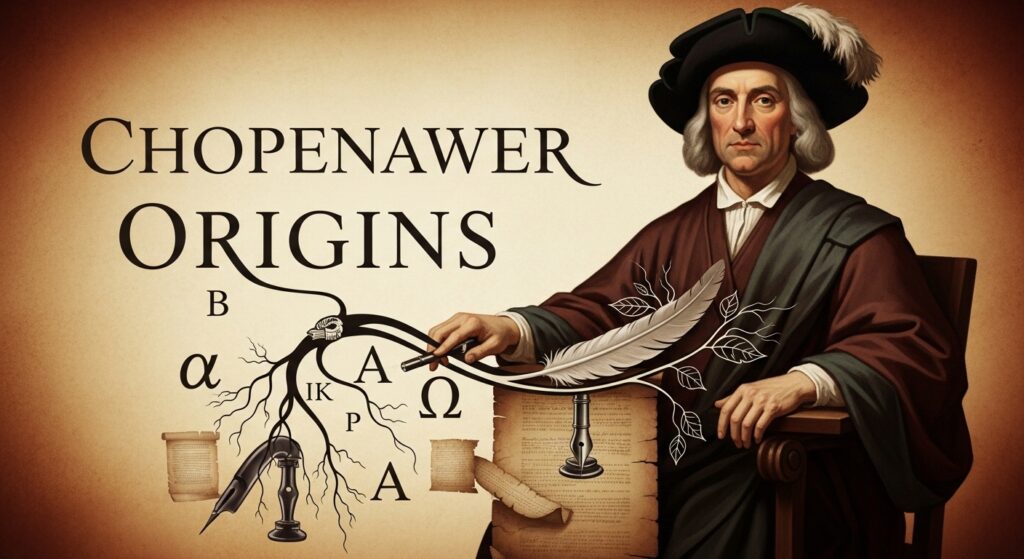
In the fast-moving digital economy, new words often appear before their meanings fully settle. Some begin as usernames, others as internal project names, brand experiments, or cultural signals within online communities. Chopenawer belongs to this intriguing category—a term that feels intentional, modern, and loaded with possibility. It doesn’t arrive with a dictionary definition, yet it carries weight in how it sounds, how it’s used, and how people interpret it. For startup founders, entrepreneurs, and tech professionals, understanding concepts like Chopenawer is less about memorizing a definition and more about recognizing how meaning is created in the digital age.
This article explores Chopenawer from its conceptual origins to its emerging modern influence, offering practical insight into why such terms matter and how they shape branding, identity, and innovation today.
The Origins of Chopenawer: A Digital-First Concept
Chopenawer appears to be a constructed term, rather than one rooted in a specific historical language or culture. This is increasingly common in the startup and tech world, where originality is often more valuable than tradition. Unlike classical words with rigid meanings, constructed terms gain relevance through usage, context, and perception.
The structure of Chopenawer suggests intention. Its phonetics feel balanced—neither overly technical nor purely artistic. This balance is important in modern naming trends, especially in technology and entrepreneurship, where a term must feel credible yet flexible. Founders often choose names like this to avoid existing associations, legal conflicts, or cultural limitations.
In this sense, Chopenawer reflects a broader shift: meaning is no longer inherited; it is designed.
What Does Chopenawer Mean?
Rather than having a fixed definition, Chopenawer functions as a semantic container. Its meaning depends on how it’s positioned and applied. In digital culture, this is not a weakness—it’s a strength.
Chopenawer can be interpreted as:
-
A brand identity waiting to be defined
-
A framework for innovation or creative thinking
-
A digital alias or platform name
-
A conceptual label for emerging systems or ideas
This openness allows Chopenawer to adapt across industries, from technology and startups to creative media and online communities. The lack of rigid meaning enables it to evolve alongside the project or identity it represents.
For entrepreneurs, this flexibility is powerful. It allows a concept to grow without being constrained by outdated definitions.
Why Names Like Chopenawer Matter in the Startup World
In today’s competitive environment, naming is strategy. A name is often the first interface between an idea and its audience. Chopenawer fits into a class of modern identifiers designed for global reach and long-term adaptability.
Startups increasingly prefer names that:
-
Are unique and searchable
-
Have available domains and handles
-
Avoid linguistic barriers
-
Feel future-ready
Chopenawer meets these criteria precisely because it is not overloaded with pre-existing meaning. It invites curiosity rather than explanation, which is valuable in branding and storytelling.
When a name sparks questions, it creates engagement—and engagement is currency in the digital economy.
Chopenawer as a Digital Identity
Beyond branding, Chopenawer functions well as a digital identity marker. In online ecosystems, identity is fluid. People and companies reinvent themselves across platforms, and names become anchors of consistency.
A term like Chopenawer works effectively because it is:
-
Distinctive without being obscure
-
Neutral enough to scale
-
Memorable in written and spoken form
Whether used as a company name, product line, or professional alias, Chopenawer supports the modern need for identities that travel across borders, platforms, and industries.
This is particularly relevant for tech professionals and founders building personal brands alongside startups.
The Psychological Impact of Constructed Names
Names influence perception more than most founders realize. Chopenawer carries a modern, abstract confidence that aligns well with innovation-driven narratives. It doesn’t promise a specific function; instead, it suggests capability and evolution.
Psychologically, such names:
-
Encourage audiences to project their own expectations
-
Feel less restrictive than descriptive labels
-
Signal originality and independence
This is why many successful technology brands started with invented or abstract names. Chopenawer fits squarely into this tradition, offering a blank slate for trust and authority to develop over time.
Practical Uses of Chopenawer in Modern Contexts
Chopenawer’s adaptability makes it suitable for multiple real-world applications. Below is a snapshot of how the term could function across different domains.
| Context | How Chopenawer Fits |
|---|---|
| Startup Branding | Serves as a unique, scalable company name |
| SaaS or Tech Products | Works as a product or platform identifier |
| Personal Brand | Functions as a professional digital alias |
| Creative Projects | Acts as a conceptual label for innovation |
| Community or Network | Becomes a shared identity around ideas |
This versatility is exactly why such terms gain traction. They grow into their meaning rather than being confined by it.
Chopenawer and the Language of Innovation
Innovation doesn’t just happen in products—it happens in language. Chopenawer is part of a growing lexicon of innovation language, where words are created to describe realities that don’t yet exist.
In emerging fields like AI, decentralized systems, and digital communities, existing vocabulary often falls short. New terms fill these gaps, enabling clearer thinking and communication.
Chopenawer exemplifies this trend by acting as a placeholder for forward-looking ideas. It allows teams and founders to talk about evolving concepts without being boxed into legacy terminology.
Trust, Authority, and Meaning Over Time
One concern founders often have with abstract names is trust. Can a word like Chopenawer feel credible? The answer lies in execution.
Authority is not embedded in a name—it is earned through consistency, value, and delivery. Over time, Chopenawer can accumulate trust as audiences associate it with quality outcomes, transparent leadership, or innovative thinking.
This process mirrors how language evolves naturally. Meaning follows behavior, not the other way around.
Chopenawer in a Global Digital Economy
Another strength of Chopenawer is its global neutrality. It doesn’t rely on cultural idioms, slang, or region-specific references. This makes it well-suited for international audiences and distributed teams.
In a world where startups launch globally from day one, such neutrality reduces friction. It allows the brand or concept to adapt locally without losing its core identity.
For entrepreneurs building cross-border ventures, this is a strategic advantage rather than a coincidence.
The Future Potential of Chopenawer
As digital ecosystems continue to evolve, terms like Chopenawer will become more common—and more valuable. They offer freedom in an environment where flexibility is essential.
Future relevance may include:
-
Acting as a platform brand in emerging tech
-
Becoming a framework or methodology name
-
Serving as a recognizable digital signature
What matters most is not what Chopenawer means today, but how intentionally it is shaped tomorrow.
Conclusion: Why Chopenawer Represents Modern Thinking
Chopenawer is more than a word. It’s a reflection of how meaning, identity, and innovation are constructed in the modern digital world. For startup founders, entrepreneurs, and tech professionals, it highlights an important truth: clarity doesn’t always come from definition—it comes from direction.
By embracing flexible, original concepts like Chopenawer, modern builders give themselves room to grow, adapt, and lead without unnecessary constraints. In a landscape defined by change, that freedom can be the most valuable asset of all.