
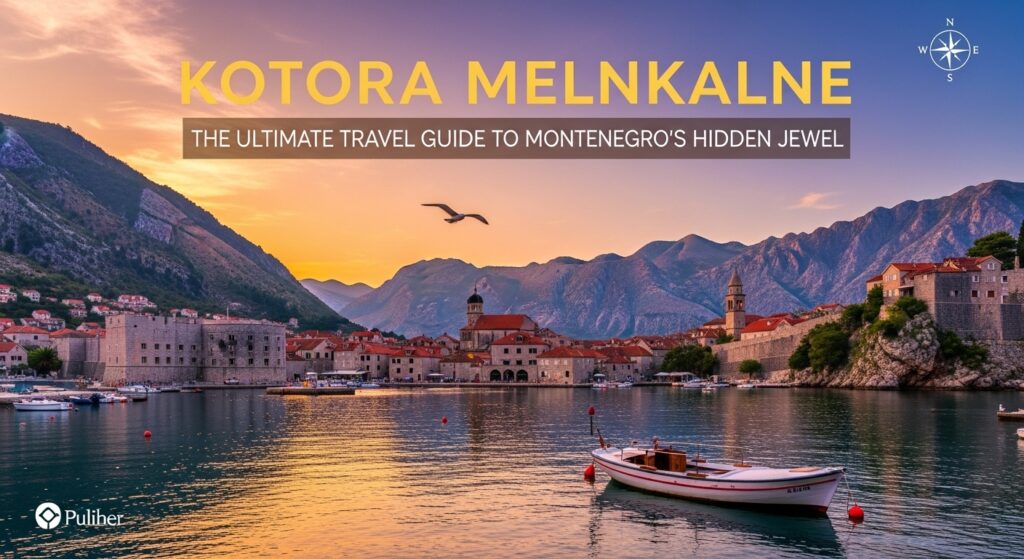
If you’ve been browsing travel forums or scrolling through niche European destination blogs lately, you might have stumbled upon the phrase Kotora Melnkalne. At first glance, it sounds like a formal, perhaps ancient, name for a hidden Baltic or Balkan secret. In reality, it is a linguistic bridge connecting curious travelers to one of the most breathtaking corners of the Adriatic: Kotor, Montenegro. People are increasingly drawn to this specific phrasing because it evokes a sense of mystery and old-world charm that the standard English name often fails to capture.
What Kotora Melnkalne Means: Unpacking the Name
To understand Kotora Melnkalne, we have to look at it through a linguistic lens. The term isn’t the official name you’ll find on a government map or a standard GPS. Instead, it appears to be a localized or translated variation—specifically drawing from Latvian or similar Baltic structures where Melnkalne literally translates to Black Mountain (Montenegro).
In this context, Kotora refers to the city of Kotor. When you put them together, you get Kotor, Montenegro. However, the reason this specific phrasing has gained traction online isn’t just about translation; it’s about symbolism. It represents a poetic interpretation of the region. It’s less of a dry geographical label and more of a descriptive title that honors the dramatic contrast between the stone city and the dark, towering limestone cliffs that loom over the bay.
Geographic and Historic Context: Where the Mountains Meet the Sea
The real-world location behind the name is the Bay of Kotor (Boka Kotorska), a winding bay of the Adriatic Sea in southwestern Montenegro. Often described as Europe’s southernmost fjord (though technically a submerged river canyon), the geography here is nothing short of theatrical.
A Medieval Stronghold
The history of this area is a tapestry of empires. Kotor itself was a significant artistic and commercial center during the Middle Ages. It spent centuries under the rule of the Republic of Venice, which is why when you walk through its gates today, you feel as though you’ve stepped into a miniature Venice—minus the canals, but with just as much marble.
The UNESCO Heritage
Because of its unique blend of Romanesque, Gothic, Renaissance, and Baroque architecture, the region is a protected UNESCO World Heritage site. The Melnkalne (Black Mountain) aspect of the name is literal here; the Orjen and Lovćen mountains rise so sharply from the water’s edge that they cast deep shadows over the town, giving the landscape its moody, majestic character.
What to See and Do: Embracing the Magic
When people search for Kotora Melnkalne, they are usually looking for the soul of Montenegro. The region offers experiences that feel both rugged and refined.
The Old Town (Stari Grad)
The heart of the experience is the Old Town. It is a labyrinth of narrow streets and squares where you are more likely to encounter a friendly local cat than a straight path. The Cathedral of Saint Tryphon, built in 1166, stands as a testament to the town’s enduring faith and architectural prowess.
Scaling the San Giovanni Fortress
For the best views of the bay, you have to earn them. A hike up the 1,350+ steps to the San Giovanni Fortress (St. John’s Fort) is a rite of passage. As you climb, the red-tiled roofs of the town shrink below you, and the turquoise waters of the bay expand toward the horizon. It is here that the scale of the Black Mountain truly hits you.
Perast and Our Lady of the Rocks
A short drive or boat ride from Kotor takes you to Perast, a silent stone village. In the middle of the water sits Our Lady of the Rocks, an artificial island created by sailors who dropped rocks in the bay after finding an icon of the Virgin Mary. It’s a place of quiet reflection and incredible maritime legend.
Cultural and Symbolic Significance
Why has this specific term, Kotora Melnkalne, started appearing in travel storytelling? It’s part of a broader trend where travelers seek deeper or more authentic-sounding names for the places they visit.
In the digital age, standard names can feel exhausted. Using a variation like Kotora Melnkalne signals that a person is looking at the destination from a different perspective—perhaps through a specific cultural lens or a desire to connect with the linguistic roots of the region. It has become a symbolic label for the undiscovered side of Montenegro, even as the country grows in popularity. It represents the intersection of the rugged wilderness and the sophisticated history of the Mediterranean.
Travel Tips and Visitor Info: Planning Your Journey
If the idea of exploring Kotora Melnkalne has piqued your interest, you’ll need some practical ground rules to make the most of your trip.
- When to Visit: The best time is during the shoulder seasons—May, June, or September. July and August can be intensely hot and crowded with cruise ship passengers, which can take away from the hidden gem feeling of the town.
- Getting There: Most visitors fly into Tivat Airport (just 15 minutes away) or Podgorica. Alternatively, many travelers arrive via a scenic bus ride from Dubrovnik, Croatia.
- The Climate: Expect a Mediterranean climate. Summers are dry and hot, while winters can be surprisingly rainy. That rain is what keeps the mountains looking so dramatic and the bay so lush.
- Local Culture: Montenegrins are known for their hospitality and their relaxed pace of life. Don’t be in a rush. Sit at a cafe, order a domaća kafa (domestic coffee), and watch the world go by.
Challenges and Opportunities: Responsible Exploration
While the rise of terms like Kotora Melnkalne shows a healthy interest in the region, it also brings challenges.
The Overtourism Hurdle
Kotor is a small town. When several large cruise ships dock at once, the narrow alleys can become nearly impassable. As a responsible traveler, try to stay overnight in the town rather than just visiting for a few hours. This supports local businesses like small guesthouses and family-run konobas (taverns) that keep the local culture alive.
Accuracy in Naming
While using poetic terms is fine for storytelling, it’s important to remember that the locals call their home Kotor and their country Crna Gora. Using the local names shows respect for the sovereignty and identity of the people. Use Kotora Melnkalne as a creative bridge, but don’t lose sight of the local language.
Conclusion: The Lasting Appeal of the Black Mountain
Kotora Melnkalne is more than just a search term; it is a gateway to understanding the dramatic beauty of Montenegro. Whether you are drawn by the medieval history, the challenging mountain hikes, or the quiet beauty of the Adriatic, this region offers something that feels timeless. By exploring it with curiosity and respect, you’ll find that the reality of the place is even more captivating than its name.