
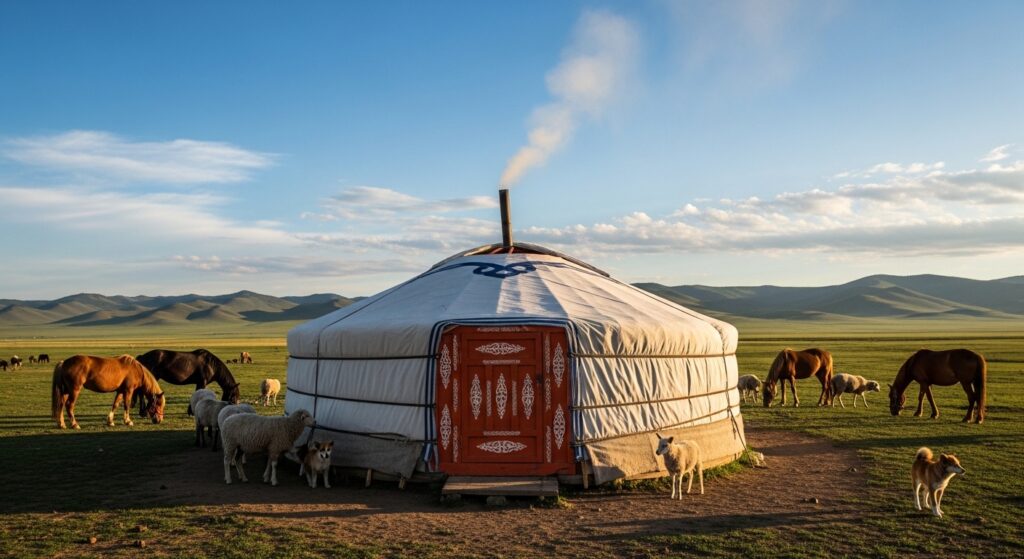
Oronsuuts are more than simply homes; they embody the spirit of Mongolian nomadism, offering both practicality and cultural significance. These traditional dwellings are designed to harmonize with the vast landscapes of Mongolia, reflecting a lifestyle that values mobility, simplicity, and connection with nature. Every oronsuut is carefully constructed to withstand harsh climates while maintaining a minimal footprint on the environment.
The Origins of Oronsuuts
The oronsuut has a long history intertwined with the nomadic traditions of the Mongolian people. Historically, Mongolian herders required portable shelters that could travel with them across the steppes, following their herds and seasonal grazing patterns. Over centuries, the design of oronsuuts evolved to meet the needs of nomads while incorporating elements of local craftsmanship and cultural symbolism.
Oronsuuts are typically circular, promoting stability against strong winds common in the open plains. The materials used—primarily felt, wood, and animal hides—offer insulation and flexibility, ensuring warmth in frigid winters and ventilation during summer months.
Structure and Design
The structure of an oronsuut is a study in efficiency and adaptability. A typical oronsuut consists of:
- A circular frame: Often made from lightweight wooden poles that form a lattice known as a khana. This frame can be disassembled and reassembled quickly.
- Felt covering: Layers of felt provide insulation against extreme temperatures. Traditionally made from sheep’s wool, felt is both durable and breathable.
- Central support and chimney: A central column supports the roof, while a small opening at the top allows smoke from a stove to escape, heating the dwelling evenly.
- Interior layout: The inside is arranged to maximize space, with sleeping areas, storage, and a cooking zone all designed for efficiency.
The circular design is not only practical but also symbolic, representing unity and the cyclical nature of life, which is a recurring theme in Mongolian culture.
The Cultural Significance of Oronsuuts
Oronsuuts are not just functional structures—they are deeply connected to Mongolian identity. They reflect a way of life that values simplicity, self-reliance, and harmony with nature. Families often pass down the knowledge of constructing and maintaining oronsuuts through generations, making each home a repository of cultural wisdom.
The interior decorations of an oronsuut often feature personal touches such as embroidered textiles, symbolic ornaments, and handcrafted furniture, combining utility with artistic expression. Festivals, rituals, and social gatherings frequently center around the oronsuut, reinforcing its role as a hub of community life.
Modern Adaptations
While oronsuuts remain a cornerstone of traditional Mongolian nomadism, modern adaptations have emerged. Some incorporate solar panels, contemporary stoves, or reinforced materials for urban settings. These adaptations preserve the essence of the oronsuut while making it suitable for modern conveniences, bridging the gap between tradition and contemporary life.
Despite modernization, the core principles—mobility, adaptability, and connection to the environment—remain intact. Modern oronsuuts continue to provide a sanctuary in the expansive landscapes of Mongolia, allowing families to live sustainably while honoring their heritage.
Oronsuuts and Sustainable Living
Oronsuuts exemplify sustainable living. The use of natural, locally sourced materials minimizes environmental impact, and the portability of the structure ensures minimal disruption to the land. Nomadic families typically leave no permanent footprint, allowing the steppe ecosystems to thrive.
The principles behind oronsuuts have inspired sustainable architecture globally, emphasizing lightweight, energy-efficient, and modular designs that coexist with nature rather than dominate it.
The Social Role of Oronsuuts
Beyond providing shelter, oronsuuts serve as spaces for learning, storytelling, and communal gatherings. Elders share wisdom, traditions, and family histories within these homes, making them centers of social cohesion.
Visitors are often welcomed into oronsuuts, reflecting the hospitality that is a hallmark of Mongolian culture. Meals, celebrations, and rituals within these dwellings strengthen the bonds between families and communities.
FAQ’s
What is an oronsuut?
An oronsuut is a traditional Mongolian dwelling used by nomads, designed to be portable, insulated, and harmonious with the environment.
How are oronsuuts built?
They are constructed with a wooden lattice frame, felt coverings for insulation, a central support column, and an efficient interior layout optimized for nomadic living.
Why are oronsuuts circular?
The circular shape offers stability against strong winds, efficient heat distribution, and symbolic unity within Mongolian culture.
Are oronsuuts still used today?
Yes, they continue to be used by nomadic families, with some modern adaptations incorporating contemporary amenities like solar power or reinforced materials.
What is the cultural significance of oronsuuts?
Oronsuuts represent family heritage, community cohesion, and the Mongolian values of simplicity, mobility, and harmony with nature.
Conclusion
Oronsuuts are more than just homes—they are living symbols of Mongolian nomadism, embodying centuries of tradition, craftsmanship, and environmental wisdom. Their design reflects practical needs while honoring cultural values, and they continue to provide a sustainable and meaningful way of life. In both traditional and modern contexts, oronsuuts offer insight into how humans can live in balance with nature, maintain strong social bonds, and preserve heritage for future generations.